Showing posts with label magic. Show all posts

Wednesday, July 27, 2022

Making a Mummy (B/X Ritual)

As you can see from the costs and spellcasting level required, making a mummy is obviously something reserved for higher level players (or NPCs). 

Making a Mummy

In order for a body to be viable for the creation of a mummy (undead type), it may be no more than 24 hours dead when the mummification begins (starting with the step in which the brains are removed).

Material Requirements

The preparation of a mummy requires the following magic items,  made according the to the standard rules for clerics fabricating magic items (must be of name level or higher, costs 500 gp/week, has a 15% chance of failure), except the cleric must be a Chaotic cleric belonging to an unholy or necrotic order.

  • Mummification table/altar. Fabrication of this inscribed and blessed altar takes 4 weeks and costs 2,000 gp. A single table made be used to make any number of mummies.
  • Obsidian scalpal. This bladed functions as a +1 dagger, takes 4 weeks to manufacture, and costs 2,000 gp. The same blade made be used to make any number of mummies.
  • Mummification tools. These blessed tools (hooks, scoops, etc.), take 2 weeks to manufacture, and costs 1,000 gp. A new set is required after being used to make 10 mummies (whether successful or unsuccessful).
  • Canopic jars. Creation of each of these inscribed clay jars made in the likeness of a god takes 2 weeks and costs 1,000 gp (8 weeks and 4,000 gp total). Four new jars are required each time a new mummy is created.
  • Canopic chest. Manufacture of this inscribed wooden chest designed to hold the 4 canopic jars takes 4 weeks and costs at least 2,000 gp. The price of the canopic chest ranges upward (depending, for example, on the inclusion of gold leaf or other decorative paints and elements). A new chest is required each time a new mummy is created.
  • Incensed resin. Manufacture of a pot of this pungent incensed varnish takes 2 weeks and costs 1,000 gp. A new pot of resin is required each time a new mummy is created.
  • Unholy water. Unholy water may be purchased or prepared via the method outlined for the “Manufacture of Holy Water” (this will be a separate post; I'll try to remember to link it when it's up). The mummification ritual requires 12 vials of unholy water.
  • Saltwater bath. This water takes 1 week to prepare and costs 500 gp to make. This water is required each time a new mummy is created.
  • Blessed tub. This tub cost 500 gp and takes 1 week to prepare. The same tub made be used to make any number of mummies
  • Blessed gummed cotton cloth. This is used for wrapping the body after it is prepared. It costs 500 gp and takes 1 week to prepare. A new bundle of cloth and pot of gum is required each time a new mummy is made.
  • Other non-magical materials. The ritual also requires a number of mundane items, including palm wine, incense, and a number of sweet-smelling materials like flowers and fragrant herbs (100 gp). 

Spell Requirements

The ritual requires the use of the following spells, all of which must be cast by a cleric of at least 9th level. Additionally, because of the number of spells required by level, it is likely the cleric performing the ritual will need to have many (if not all) of them prepared ahead of time as scrolls.

  • Prayer of protection. This is a 4th level cleric spell specific to mummy-making that must be cast 4 times during the ritual by cleric performing the ritual.
  • Animate dead and raise dead. These two spells must be cast simultaneously upon the prepared body. The latter must be cast by the name-level cleric performing the ritual. The former may be cast as a 3rd level spell by a cleric of 6th level or higher. 

Preparation of the Body

The removal and preparation of the organs outlined below takes 1d4+4 hours. Furthermore, the cleric performing the ritual must have a minimum Dexterity of 13 or the ritual will fail.

To begin the ritual for mummification, the body is first laid out on the table. The spellcaster uses a hammer to chisel through the bone of the nose. The brains are then withdrawn through the nostrils using an iron hook. Any remaining bits of brain matter are then removed with a long scoop. Finally, the skull is rinsed with unholy water. The brain is then disposed of, as it is unnecessary to the preservation of the mummy’s life as undead. 

Using the sacred blade, a small incision is made along the left side of the body, and the abdominal organs are removed. Each one, save for the kidneys, are set aside. The lungs are then removed. The heart, being the core of a person, the seat of emotions and the mind, is left in the body. 

The abdominal organs and lungs must be washed with unholy water, then coated in the incensed resin, wrapped in linen strips and placed the canopic jars.  

  • The lungs are placed in a canopic jar made in the representation of Hapi, the baboon-headed god representing the north. A prayer of protection is then made to the goddess Nepthys as the accompanying hieroglyphic inscription is made upon the jar’s exterior. 
  • The stomach is placed in a canopic jar made in the representation of Duamutef, the jackal-heaed god representing the east. A prayer of protection is then made to the goddess Neith as the accompanying hieroglyphic inscription is made upon the jar’s exterior (requiring a successful attempt by the wenwet using the copy scroll/spell ability).  
  • The liver is placed in a canopic jar made in the representation of Imseti, the human-headed god representing the south. A prayer of protection is then made to the goddess Isis as the accompanying hieroglyphic inscription is made upon the jar’s exterior.
  • The intestines are then placed in a canopic jar made in the representation of Qebehsenuef, the falcon-headed god representing the wet. A prayer of protection is then made to the goddess Selket as the accompanying hieroglyphic inscription is made upon the jar’s exterior.

The four canopic jars are then placed in canopic chest. 

The empty chest cavity of the body is then rinsed with palm wine and and blessed before being filled with the incense and other sweet-smelling materials. 

The body is then steeped for 3 days in the saltwater bath. After the steeping is complete, the body is washed with purfied water, at which point it is ready for swathing. The body is then wrapped in the blessed gummed cotton cloth. 

Finally, to prepare the mummy for its undeath, two clerics must simultaneously casting upon the prepared mummy, with one cleric casting the spell animate dead, and the other casting the spell raise dead. 

The body is then laid in a tomb with the canopic chest (and jars). If the entire process has been followed correctly, and each step has succeeded as outlined, the mummy will rise to “life” (as undead) in 4d6 days from the time the ritual has been completed. 

Because the brain is removed as part of the mummification process, a mummy’s will is corrupted, resulting in its evil disposition.


Tuesday, September 24, 2019

A few new magic items...

Just a few things to have some new material on the blog for comment spammers to add links to their online betting sites and proofreading software..

Visor of the Bat
(Usable by any allowed to wear armor.)
The visor of this simple bascinet helmet features no holes, but is engraved with the face of a bat, its mouth wide open (as if it is screeching). Normally, this helmet acts as a +1 helmet, but when the visor is closed, the helmet emits a soft, high-pitched ringing sound and the helmet provides the wearer the ability of echolocation. Without the use of traditional vision, the wearer is able to "see" in the darkness (using radar-sense provided by the closed helmet) to a distance of 30'. Because the echolocation requires the ringing sound to be effective, the helmet does not work in areas of magical silence.

Dancing Melee Band
(Usable by anyone allowed to use a single-handed melee weapon.)
Inscribed around the circumference of this flat silver band are a series of dancing figures each holding a variety of single-handed melee weapon (e.g., a sword, an axe, a dagger, etc.). During melee combat, the wearer moves so gracefully, they appear to be dancing. While engaged, this provides them a –1 bonus to AC (even against ranged attacks made into the melee), and a +1 bonus on all melee "to hit" rolls. If the wearer is not engaged, the ring provides no benefits.

Armor of Buoyancy
(Permitted to any allowed to wear plate armor.)
The surface of this icy-blue steel +1 plate armor features delicate scrollwork engraving reminiscent of curing ocean waves. Though it normally has the same weight and encumbrance as standard steel plate, it is buoyant in volumes of water or similar liquids (but not in viscous substances like lava, mud, or quicksand). The maximum swimming speed of any character wearing this armor is 30'(10').

Thursday, July 6, 2017

Some Collected New Magic Items

Those who are circled in with me on G+ know that, for a few weeks I have been posting a new magic item every day to my "New Magic Items" collection. At some point (several months to a year from now) I plan to collect them and publish them. However, every once in a while I will collect the recent creations and post them here (at the blog). So to get you caught up, here they are in reverse chronological order (most recent first).


Spectral Tonic

This potion is usable by anyone.

Upon imbibing this potion, the drinker's visage changes to appear as if they'd become a spectre. This is an illusion that cannot be disbelieved by others. The imbiber does not become incorporeal, and retains their normal abilities.

Anyone taking a sip of this potion when finding it to determine its nature has a 50% chance of mistaking it for spectral brew.


Spectral Brew

This potion is usable by anyone.

Upon imbibing this potion, the drinker becomes incorporeal and appears as if they were a spectre. In this form, a +1 or better weapon is required to hit the character, the character can move through non-magical objects and fly at the same movement rate as a spectre, and the character is able to surprise on a 1 to 4 (on 1d6); otherwise, the character retains their normal abilities. 


Ghostly Accord

This item may only be used by those characters permitted the same items as magic-users.

This piece of parchment appears as a contract between two unspecified parties. When read aloud, and as the two parties to the contract the caster uses his or her name and the name of a nearby undead spirit (e.g., a specific ghost, spectre, or poltergeist; within a 120' range of the caster), a truce is forged between the caster and the undead spirit. As long as the caster or the caster's associates do not harm the spirit, the spirit is bound to not harm them. The spirit is not, however, prohibited from being a nuisance or making it more difficult for the caster and the caster's associates to achieve a goal.


Club of Cruelty

This magical weapon is not allowed to characters that are forbidden the use of bladed weapons.

This club, carved from dark ebony wood, features a surface so highly polished, it almost appears as if lacquered. It strikes normally as a +1 weapon, doing 1d4+1 on a successful hit. However, on a natural "to hit" roll of "20," metal spikes magically protrude from the club, doing an additional 1d4 damage before retracting back into the club.


Hydra's Arrow

This item is usable by any character permitted to use a bow as s weapon.

The shaft of this delicately crafted arrow appears to be composed of several smaller intertwined strands of young (green) wood. When fired, the arrow "splits" into multiple (1d4+1) +1 arrows directed at a (single) target creature. A separate "to hit" roll is required for each arrow, but each successful strike lands for 1d6+1 damage. If fired into melee, arrows that miss have a chance of striking creatures engaged with the original target. Recovery of the resulting +1 arrows (after combat) is at the DM's discretion. Once the arrows have split, they cannot be recombined.


Climber's Armor

This item may be worn by any character normally permitted to wear leather armor. However, it provides additional boons to those with thieving abilities.

This stone-gray suit of leather armor features a rope-like motif at its edges. For characters with the ability to Climb Sheer Surfaces (like thieves), it provides a 2 level bonus to such attempts; for all others, it provides the ability to Climb Sheer Surfaces as a 2nd level thief. Additionally, it provides those with the ability to hide in shadows a natural chameleon-like camouflage while climbing, enabling them to be "hidden" while climbing (made as a standard Hide in Shadows check). 


Shadow Shield

This item may be used by any character permitted to use a shield.

This rectangular shield of dark iron is incredibly light and easily handled, despite it's rather bulky appearance. Its face features a vertically-elongated diamond overlaid through its middle with two interlocking rings (the triangle represents shadow and the circles represent light and dark—shadow being the place where light and dark meet).

The bearer of this shield becomes naturally cloaked in shadow, benefiting from a –2 Armor Class bonus in all indoor and underground situations. (The benefit does not apply in full daylight or outdoors).

Additionally, the bearer of the shield may shadow walk at will, stepping into a shadow and traveling through the Shadow Plane to another shadow within a 60' range.

Finally, if standing still and concentrating, the bearer of the shield may create a 30' radius of magical shadow, with all “to hit” rolls in the affected area suffering a –3 penalty. 


Prismatic Necklace

This item is usable only by magic-users and those with access to illusionary magic (e.g., gnomes with illusory magic).

This 10" silver chain features seven glass beads, each approximately ¼" in diameter and differently colored (from left-to-right in the following order: red, orange, yellow, green, blue, indigo, violet).

Each bead may be used up to five times per day. If used individually, they may be "simultaneously used multiple times" (e.g., the 1d6 damage caused by the red bead may be stacked with another use of the red bed for a total of 2d6 damage). Beads of different colors may be used in combination, but in such cases the effects of a single bead color may not be stacked (e.g., if using the red and green beads in combination, only a single use of each of those beads is permitted at the same time). The range of any effect is 60', and the effects of each bead are outlined below:

Red: The target takes 1d6 fire damage on a failed save vs. spells, or half as much damage on a successful one.

Orange: The target takes 1d6 acid damage on a failed save vs. spells, or half as much damage on a successful one.

Yellow: The target takes 1d6 lightning damage on a failed save vs. spells, or half as much damage on a successful one.

Green: The target takes 1d6 poison damage on a failed save vs. spells, or half as much damage on a successful one.

Blue: The target takes 1d6 cold damage on a failed save vs. spells, or half as much damage on a successful one.

Indigo: On a failed save vs. spells, the target is confused (as the spell) for 1d6 rounds. A successful save negates the effect.

Violet: On a failed save vs. spells, the target is stunned for 1d6 rounds. A successful save negates the effect.

If all 7 colors are used at the same time, the target is automatically blinded for 1d4 rounds.


Medicine Spoon

This item is usable only by clerical spellcasters of lawful or neutral alignment (non-evil), but any class or creature may benefit from its curing properties.

When this decorative gold spoon is filled with purified water and prayed over by a clerical spellcaster for 1 uninterrupted turn, the water becomes a dose of a potion that will cure disease (as the spell). This ability of the spoon is usable 3×/day.

Holy water will not be transformed, nor will water that has not been purified.


Wand of Spell Stealing

This item may only be used by characters able to use those items as magic-users.

This item is carved from ebony, with a core of red dragon bone.

It works similarly to a ring of spell storing (storing a limited total number of spell levels), but gains spells by stealing them from an arcane caster within a 120' range. As a spellcasting action, the wielder need simply point the wand at a target and speak the trigger word, and the wand will absorb a randomly-selected spell of the highest level storable in the wand, remove it from the target's memorized spells for the day, and store it in the wand. If a spell of that level is not available, the wand will randomly steal a spell from the next level down. If no spell is available small enough to fit in the wand, the attempt fails automatically. The target is permitted a saving throw vs. spells to avoid having a spell stolen.

To determine what spells have been stored in the wand requires 1 round of concentration while holding the wand. A spellcaster of any level may use any spell stored in the wand, regardless of the stored spell's level.

Casters are permitted to steal spells from themselves or others who are willing (no saving throw required) in order to store spells for future use.


Ringwood Rings

Ringwood rings are normally usable only by clerics or druids. Some rings may be usable by other classes at the DM’s discretion.

These signet style rings are carved from the center core of a young tree, and the flat surface of each ring’s face features the innermost concentric circles of the tree’s trunk. The properties of each ring depend on the type of wood from which the ring is carved, as outlined below:

Alder: +1 to Charisma; +1 on saves vs. fear and psionic domination

Apple: +2 on reaction rolls

Ash: +1 to Intelligence; +1 to Wisdom; read languages 3×/day; cure disease 1×/week

Basswood: +1 Charisma; charm person 3×/week

Beech: commune 1×/week; heals 1d3 hp per day

Birch: dispel evil 1×/day; slows aging by 25%

Cedar: dispel evil 1×/week; protection from evil (personal) 1×/day; protection from evil 10' radius 1×/week

Cherry: intuition (–1 AC and +1 “to hit” bonuses); doubles the range of all detection spells; speak with animal 1×/day

Elder: protection from evil (personal; always in effect); banishment 1×/day; +1 on all saves vs. magic; heals 1d4 hp per day

Elm: half the normal rest time required after moving/traveling; all opponents save vs. magical effects with a –1 penalty

Hawthorn: +1 to all psionic saving throws; +1 to saves vs. fear; banishment 1×/day

Hazel: locate object 1×/day; polymorph self 1×/day; polymorph other 3×/week

Honey Locust: immunity to non-magical diseases; cure disease 1×/day; +2 reaction bonus when dealing with opposite sex

Ivy: +1 to Strength; –3 AC vs. elementals

Lilac: phantasmal force 1×/day; automatically disbelieve illusions

Maple: heals 1d6+1 hp per day; telepathy (at will) to 120' range

Oak: heals 1d6+1 hp per day; surprised only on a 1 (on 1d6); find secret doors on a 1-3 (on 1d6)

Poplar: +1 to all save vs. magic; opponents save vs. magical effects with a –1 penalty; as ring of spell storing (stores up to 10 spell levels)

Walnut: teleportation 1×/day; commune 1×/week

WIllow: cure disease 1×/day; resurrects as 2 levels higher


Mystic's Mala

This item is usable only by psionic characters.

A mystic's mala is a string of 108 wooden prayer beads tipped with a tassel. The item is designed for chanting or mentally repeating a mantra 108 times. By spending 3 turns (30 minutes) meditating and repeating a mantra 108 times, the character recovers 1 PSP per psionic level, up to the character's maximum. This meditational time is outside of the character's normal meditation (after a full night's rest to restore PSPs). The beads are usable only once per day; once any character has used them for the day, they cannot be used again by anyone until the following day.


Morphstriker

This item is usable by any character class, as long as it is in a form allowed to that character class. For example, a cleric may hold it while it is in the form of the dagger, but may not use it. The cleric may then wish for it to transform into a mace, and use it once it does.

This +1 weapon appears as a finely crafted, but relatively unadorned specimen of any basic/standard handheld melee weapon type. The wielder simply need hold the item and wish for a different weapon, and it will instantaneously transform into that form. It may become as small as a dagger or as large as a pole arm, and may take the form of a slashing, piercing, or bludgeoning weapon.


Fiendish Mantle

Alignment and class restrictions for use of this item are at the discretion of the DM.

This hooded overgarment is sewn from deep red velvet and often crackles with static electricity (a byproduct of the magic coursing within it).

The mantle provides the same resistances and immunities normally possessed by an abyssal demon: half damage from cold, fire, electricity, and gas; no damage from magical energy (e.g. magic missile), poison, or silver; and a +1 or greater weapon is required to hit the wearer.

When the wearer pulls the hood over their head, they polymorph to assume a fiendish appearance (of their choosing at the time the hood is drawn) of approximately the same size and form (e.g., a bipedal humanoid approximately 5'10" tall would appear as a bipedal fiend approximately 5'10" tall). If the wearer chooses to take on a particularly horrifying appearance, all living creatures in a 10' radius must save vs. spells or flee in fear for 2 turns. The wearer may change back to their normal form by pulling the hood down. The wearer cannot change appearance while the hood is up, and must pull the hood down then back up to take on a different fiendish appearance. The fiendish appearance does not grant any special abilities or change attributes or abilities possessed by the wearer (e.g., the fiendish appearance may have wings, but no ability to fly is granted). True seeing (or similar) will reveal the true nature of the wearer.


Fiery Chakram

This item may not be used by those prohibited from using bladed weapons.

This ranged weapon (25'/50'/75') is a flat O-shaped ring of metal with a sharpened outer edge. It measures approximately 10" in diameter with a 7" diameter hole through the middle, and a flame motif inscribed along its surface. On a successful "to hit" roll, it does 1d6 damage, plus the target must save vs. spell or take an additional 1d6 fire damage. The weapon returns to the thrower at the end of the phase.


Periapt of Ethereal Sight

Any character of any class or alignment may use this item.

This platinum amulet features a downward-pointing triangle set in a circle and strung from a thin platinum cord. It provides the wearer sight into the Ethereal Plane from any coexisting plane (e.g., the Material or Astral Planes) to a distance of 60'. If worn by a psionic creature, the range extends to 120'. If the psionic creature has attained access to the clairsentient ckakra, the range extends to 180'. This item does not provide any sort of access to the Ethereal Plane, or any ability to attack into it, or affect it or anything in it.


Stole of Radiance

This item is usable only by lawful clerics.

This band of pure white silk cloth measures 9' long and 4" wide, and its straight ends are capped with a tasseled fringes of gold silk. The long edges of the stole are embroidered with gold silk thread, and each end face prominently features an embroidered 8-spoked wheel symbol (for righteousness). The stole provides the following abilities:

The wearer benefits from a +1 bonus on all attacks and saving throws, and a -1 bonus to Armor Class.

The wearer gains a 1 level bonus on all attempts to turn undead. (Does not provide the ability to. turn undead, only an improvement for those who already possess it. Also, does not provide bonus on attempts to rebuke or command undead.)

The stole prevents 1 HD of level drain per day and provides and an additional +1 bonus (beyond that noted above) on saving throws to prevent level drain (where such a saving throw is permitted).

At will, the stole shines equal to the light of a torch. Turning the light off and on is a spellcasting action by the wearer, but does not limit or prohibit any movement, attacks, or similar physical actions normally allowed for the round.


Kadabra Cloak

This item may only be used by characters able to use those magic-items normally reserved for magic-users.

This simple piece of purple velvet cloth may be worn as a standard cloak. However, when placed over an inanimate object which it completely covers, the cloak's trigger word spoken, and the cloak pulled away, the object underneath the cloak will seemingly have disappeared. In truth, it is transported to a pocket universe. The object can be recalled by placing the cloak over an empty area, speaking the trigger word again, and pulling the cloak away to reveal the object returned from the pocket universe. Only one object may be "pocketed away" at a time. Otherwise, the cloak may be used as often as desired.


Resurrection Ankh

Any character of any class or alignment may use this item.

This item appears as a simple silver ankh about 3" tall, strung from a thin silver chain. This item normally provides the same benefits as a ring of protection +1. However, if a character dies while wearing this item, it has a chance of resurrecting that character. The base chance is 100% minus 5% per level/HD to a minimum of 1%. If successful, the character is resurrected (as a resurrection spell) a number of rounds later equal to their level/HD. Unclassed characters and those with fewer than 1 HD are considered 1st level/1 HD for the sake of the amulet's chances of success and number of rounds until resurrection. Once the ankh has successfully resurrected a character (regardless of HD/level), that benefit is considered expended and it becomes a simple ankh of protection +1.


Thursday, November 29, 2012

Scroll Week Day 4: Preparing Quills

Yesterday, I addressed the acquisition of "raw" feathers, as well as the associate costs, etc. Today, I'll address preparing those feathers for use a quill

Cleaning, Curing, and Cutting

Once a feather has been obtained, it must be cured, cut, and trimmed in order to be used for writing.

First, the feather must be soaked (to make it more pliable) in preparation for curing. For the feathers of ordinary and extraordinary creatures, this can be accomplished by soaking the feather for approximately 24 hours in water that has been purified (by a cleric of any level). For the feathers of magical creatures, the water must also be blessed by a cleric of at least 7th level, and the feather must be soaked in that water for a number of days equal to the difference between an AC of 10 and the AC of the creature from which the feather was procured (e.g., a feather from a magical creature of an AC of 7 would need to soak for 3 days in purified and blessed water.)

Once a feather has soaked, it is tempered to give the tube resilience and toughness (making it less brittle). For the feathers of ordinary and extraordinary creatures, this is accomplished by first heating purified sand (through the use of the cleric spell purify food and drink), then removing the sand from the heat source, and third plunging the tip of the feather into the hot sand, allowing it to remain there until the sand cools. For magical creatures immune to the effects of heat, this tempering process is normally impossible to achieve, and will affect the success of trimming and cutting the feather (as outlined below).

Once the feather has been tempered, it is ready to be cleaned, trimmed, and cut. First, the barbs nearest the tip are removed, giving the hand a clean area to grip the quill. Next, the tip is trimmed to create a small opening at the end of the barrel, allowing access to remove membranes from the inside of the barrel. Finally, the tip is shaped (adding both a point, as well as a “slit” to aid ink flow). For the feathers of ordinary and extraordinary creatures, the chance of success for this process is 10% per level of the spellcaster plus 10% for each point of dexterity above 15 (e.g., a 7th level magic-user with a dexterity of 16 would have a 80% chance to successfully clean and cut an ordinary/extraordinary feather for curing.) For the feathers of magical creatures, the chance of success is the same as above minus the difference between an AC of 10 and the AC of the creature from which the feature was procured times 5% (e.g., the same magic user attempting to clean the feather of a magical creature with an AC of 5 would have a 55% chance of success.) Furthermore, if a magical creature is immune to the effects of normal weapons, the tools being used by the scribe preparing the feather must be of a sufficient level to affect the creature (e.g., if a +2 or better weapon is required “to hit” the creature normally, the tools of the scribe must likewise be sufficiently magically endowed.) For the feathers of creatures immune to the effects of heat (and therefore immune to the effects of the heated sand), the chance of success is similar to that of magical creatures (as above) with the AC modifier multiplied by 10% instead of 5% (e.g., the same magic user attempting to prepare the quill of a magical creature immune to the effects of heat would have only a 30% chance of succeeding.)

Wednesday, November 28, 2012

Scroll Week Day 3: Feather Availability and Pricing

Today's scroll week entry will take a look at "raw" feather pricing and availability, while tomorrow's entry will address the process for preparing a raw feather for use as a quill.

Suitability of Feathers
The most suitable feathers for writing come from the outer rear edge of the wing of a bird and are denominated by the order in which they are fixed to the wing, with the first of these feathers (the “pinion”) being the most desirable for scribes. The second and third feathers are also generally acceptable, even for the more discerning scribe.

Feather Pricing
Though "raw" feathers (those feathers not yet prepared for use as a quill) of extraordinary and magical creatures are not widely available for sale, some varieties may be found in more esoterically-stocked magic shops. To determine the “fair market” price in g.p. for a raw (unprepared) pinion feather, multiply the experience point value of the creature (including XPs for the creature's average hit points) by the "frequency factor" of the creature as below:

Frequency Freq. Factor
Common .5 (one-half)
Uncommon 2
Rare 5
Very Rare 10

Feather pricing example - griffon (per 1e DMG):
Experience point value = 375 + 10/hp (w/ 28 average hp = +280) = 655 XP
Griffon = uncommon = frequency factor of 2
655 x 2 = 1,310 gp fair market price for a griffon pinion feather


Normally, “second” and “third” position feathers are priced respectively at 95% and 90% the value of pinion/prime feathers.

Prepared Quills
Prepared quills of an extraordinary or magical nature are nearly impossible to come by, but spellcasters/merchants who specialize in the trade (of preparing quills) are not unheard of, often demanding ten times or more the cost of a “raw” feather for a prepared quill of the same type.

ABOUT THE GRIFFIN IMAGE AT THE TOP OF THIS PAGE...
The griffin image on this page came from Wikimedia and was donated by educational publisher Pearson Scott Foresman. I will posting soon about their donation from 2007 and the help Wikimedia still needs to finalize those images so they are ALL available the public.

Tuesday, November 27, 2012

Scroll Week Day 2: Attribute Modifiers

I'm not sure why attribute modifiers aren't taken into account in the DMG regarding scroll inscription. Honestly, I can't even take a cap off a fountain pen without getting ink all over my index finger. I can't imagine having to spend days (or weeks if you use the BX time requirements) trying "not to mess up" a scroll. The real question is how much or how little modifier there should be?

On the chart at left, my thinking is this... after a certain point toward the "high end" of the attributes (in this case, around 15), the chance of failure "flattens out" if you're "following directions" to create the scroll. But below that point, I think it would get proportionately easier to screw up. No offense to those magic-users out there with the absolute minimum attributes required for the class, but a magic-user with INT and DEX of 9 each should face a much higher failure rate for successful scroll creation than a magic-user with INT and DEX of 18 each, regardless of the level of the spellcaster or the spell. BTW, modifiers are cumulative, so yes... a spellcaster with a DEX and INT of 9 each would modify their chance of success by -150%!)

Monday, November 26, 2012

Scroll Week Day 1: Number of Spells per Scroll

Ever since I wrote the post Scrutinizing the Scroll: Papyrus, Parchment and Vellum back in February of this year, it has continually been the most-viewed page in the history of this blog. With Comprehending the Quill and Investigating Ink, it's formed a trilogy that I hope someday finds life as a stand-alone supplement with a comprehensive approach to scroll creation for OSR editions (generically). After all, no matter which old-school edition you prefer, the rules regarding scroll creation are skimpy at best. So with that in mind, I put forth this week's post to cover some of the bases that I feel are uncovered by the rulebooks, but easily addressed. Today, I'll address the need for rules regarding the number of spells that may be inscribed on a single scroll...

Scroll Space Requirements

More than one spell may be inscribed on a single piece of papyrus, parchment, or vellum. However, the total space required for inscription is dependent upon the level and type of spells being inscribed, as well as the level of the spellcaster inscribing the scroll.

The maximum number of spells that a spellcaster may inscribe on a standard-sized sheet is a sum of spell levels no greater than the level of the spell caster (e.g., a 9th level magic-user may inscribe one 4th level spell and one 5th level spell on the same page, but may not inscribe two 5th level spells on the same page).

The maximum number of spells allowed on a standard-sized sheet (while not accounting for the scribe's spellcasting level) is a sum of spell levels no greater than 20 (e.g., two 9th level spells and one 2nd level spell would fit on the same scroll, but two 9th level spells and one 3rd level spell would not.)

Scrolls requiring more space must utilize a larger sheet, rather than a series of “attached” sheets. Any attempt to glue or bind multiple sheets together will cause impurities and “blemishes” to the scroll’s surface, hindering or possibly even nullifying the intended effects of the scroll.

Tuesday, October 16, 2012

Of Scroll and Scribe (Revisited)

Back in February of this year, I put a post together talking about parchment and papyrus, in the context of scroll creation for D&D. I had no idea it would go on to become my most-viewed blog entry of all time.

For my newer followers, here are the links to what became a trilogy of articles related to the subject (and founding the basis for a project that, for now, is on the back burner... but staying warm).

Scrutinizing the Scroll Part I: Papyrus, Parchment and Vellum
Scrutinizing the Scroll Part II: Comprehending the Quill
Scrutinizing the Scroll Part III: Investigating Ink


Thursday, July 19, 2012

The 3 Tenets of Magic I've adopted*
as I put my head back to The System: Expanded

I. Magic is a talent

II. Magic can be learned and mastered if the talent exists

III. Magic is dangerous (at any "level" of experience)

Inspired by Faust Aleph-Null, the serialized version of the book Black Easter by James Blish.

Wednesday, July 18, 2012

Should Druids be Allowed to Cast
the Spell Hallucinatory Forest?

Simply put, Hallucinatory Terrain is the only clerical or druidic spell in the 1e Player's Handbook that falls under the "illusion/phantasm" classification. I can understand the rare divination spell like locate plants and even necromantic spells like cure disease. After all, those types of spells seem to fall into areas where a cleric or druid would have some spiritual "domain". But there just seems to be something out of place about a single illusion/phantasm spell from out of approximately 150 cleric AND druid spells (counting individual spells available to both, like cure light wounds, as 2 spells) that is an illusion/phantasm spell.

Discuss.

Monday, June 25, 2012

Scrutinizing the Scroll Part III: Investigating Ink


I had not originally intended to followup my previous two posts (Scrutinizing the Scroll:" Papyrus, Parchment and Vellum and Scrutinizing the Scroll Part II: Comprehending the Quill) with a third post about pigments and dyes. That being said, I also had no intention of following the original Scrutinizing the Scroll post with an additional post on writing utensils. However, based on speculation on other blogs, as well as the potential for application to game play, it was inevitable. I'm just sorry it took this long to get to it.

IT STARTS WITH SCIENCE
That may be blasphemous to certain clerics or to those wizardly sorts that think of magic as an art but, when it comes to color, it starts with the science of light. Without getting into a whole discussion of the basic difference between additive color (e.g., TVs, PDAs and computer monitors) and subtractive color (e.g., physically written and printed matter), know that this discussion will be limited to the realm of subtractive color as we are restricting ourselves to a consideration of the written scroll and its game world implications and applications.

PIGMENTS & DYES
In subtractive color, certain wavelengths are "removed" from (the total spectrum of visible) light. This is done through the use of pigments and dyes that filter out certain wavelengths to reflect the remaining wavelengths back from the substrate, and allowing those wavelengths back into the eye. So a pigment or dye that appears blue, actually filters out all of the other colors, allowing only the blue wavelengths to enter the eye. (NOTE: fluorescent, phosphorescent, and other forms of luminescent materials actually emit light.) Pigments and dyes are quite similar in the way they react with light (especially in terms of their color properties), but are vastly different in the way they react with the substrate to which they are applied. Simply put, the difference between pigments and dyes as color substances is this: pigments are insoluble and dyes are soluble.

PIGMENTS
For a pigment (as insoluble matter) to be applied to paper, it must be accompanied by a binding agent that will both: A) hold the pigment into a form that can be held/applied, and B) allow the pigment to be held to the writing substrate. Some binders are naturally darker than others (e.g., walnut oil compared to linseed oil), and each has particular way of reacting to temperature—and that's what it all comes down to. Dependent upon the binder being used (and, on occasion, the pigment), the key considerations of clarity, finish, smoothness of application, and so on usually come down to the temperature. How quickly does the oil/fat heat? And to what temperature should it be heated in order to remove the most impurities, most readily incorporate the pigment, best sustain or achieve the desired color, and produce the consistency desired for application? And then there's drying time.

Regardless of the method of application (brush, finger, stick, et al.), because the pigment is insoluble, it must "rest" on the surface of the substrate (paper, papyrus, et al.) Though the oils from the binder may bleed into the substrate and have affinity with it (see "Dyes" below), and some particles of the pigment may stain the substrate, as a whole the pigment does not.

DYES
Dyes, because they are soluble (unlike pigments), are normally applied in an aqueous solution which may or may not include a mordant (from the Latin "mordere", meaning "to bite) to give it fastness (usually included in dyes used to dye fabrics so the dye doesn't "wash out" from the fibers.) Also because they are soluble, dyes are able to form a bond with the surfaces to which they are applied (having affinity). Whereas the binder acts a "holding agent" for pigments, the aqueous solution acts as a "carrier", bringing it to the surface in a form that will allow the dye to form its bond.

SOURCES OF PIGMENTS AND DYES
Pigments and dyes come from both organic sources (vegetable and animal matter) or inorganic sources (minerals).
Example Plant Sources: roots, berries, bark, leaves, wood, fungi, lichen
Example Animal Sources: insects, cephalopods
Example Mineral (Inorganic) Sources: clay, iron oxide, lapus lazuli (an ultramarine semi-precious stone)

INK
For the purpose of this discussion, we will use the term "ink" in a broader way than the restricted definition many have for ink (as something you use to write with) vs. paint (which is not something used to write with.) In this discussion, ink is simply a viscous substance (liquid or paste) that holds/carries pigments or dyes and is used to apply coloring/marking to a surface.

Regardless of formula, an ink commonly comes down to four components: 1) colorants (pigments and dyes), 2) vehicles (binders/suspenders), 3) additives (to control flow and thickness), and 4) carrier substances (to keep the pigment/dye even distributed in the fluid matrix). Additionally, the additives and/or carrier substances may perform the duty of inhibiting the growth of infectious agents (like mold).

Additionally, inks generally fall into four classes: 1) aqueous, 2) liquid, 3) paste, and 4) powder. While the viscosity of an ink will determine whether a quill can be used of if a brush or some other writing utensil (e.g., a stylus) is required, powdered "inks" are much more contemporary and are most commonly found in thermographic printing (you know.. those cheap "raised letter" business cards... yup... that's a powder that's "melted" onto the paper.) Powders, however, may be used as an addition to a written sheet to aid in drying.

GAMING CONSIDERATIONS

MATERIAL SOURCES
Dyes can often be removed from plant and animal sources by boiling (or capturing/extracting in the case of insect or cephalopod secretions) and pigments are simply ground into a fine powder (putting that stereotypical mortar and pestle to good use). Colors can often be changed, enhanced, and/or synthesized through other means (e.g., interaction with other substances or through exposure to certain temperatures).

USE OF PIGMENTS VS. DYES
While pigments are usually much more color-fast (hold their color longer without fading), they can often be more expensive for a couple of reasons: 1) their source (e.g., semi-precious and precious stones and metals) and 2) the quantity of pigment required compared to dyes (which are much easer to "thin" with the use of a carrier.) The strength of a dye can also affect the strength of a scroll's desire effect. For example, a scroll written with a "watered-down" ink may produce a much weaker effect than a scroll written with a deep, rich, "uncut" source ink.

ULTRAVIOLET SPECTRUM
What of those pigments and dyes that absorb and re-emit light in the ultraviolet spectrum? Yes, they are invisible to the human eye, but in 1e many creatures are capable of seeing into that spectrum. That "blank" piece of vellum could easily be a True Seeing scroll written in an otherwise "invisible" ink that is easily seen by vision in the ultraviolet spectrum.

FINAL THOUGHTS
There is almost no limit to what pigment or dye source can be used to create an ink, or what you can do to it to achieve an effect; just understand the other (non-coloring) components required to create the ink, and that the process by which the ink is applied to the surface (per the Comprehending the Quill post) is dependent upon all the factors discussed above.

Now all that's left is to incorporate all of these posts into a game system for creating scrolls.

I guess I better get started on that.

Monday, March 19, 2012

Scrutinizing the Scroll Part II: Comprehending the Quill

As a followup to my earlier post Scrutinizing the Scroll, I've decided to expand on the paper discussion there with some additional information about the various writing instruments associated with the various writing forms. As mentioned in that original post, all writing requires both a substrate (e.g., paper, papyrus, and wet clay) as well as a medium and, often, a utensil. In this post, I'll take a deeper look at those utensils in an attempt to provide the inventive DM additional fodder for scroll-related quests and the like.

Prehistoric Writing Instruments
The theories about what the cavemen used as a utensil are widely varied, but are nonetheless pretty interesting. While most of the following utensil types supposedly originate during prehistoric times, their use goes far beyond and, in many cases, continue through to today.

The Finger
Anyone who's ever had dust, food, or the blood of your recently killed prey on your fingers, and then wiped them off on whatever's nearby, knows it's not a far stretch to imagine that the human finger was the original writing instrument.

In game terms, the finger is not necessarily the most suitable writing instrument for producing a successful scroll. But if all you've got is the blood of that troll you just killed, and you need to draw a protective rune on the door you're about to lock, it will have to do.

Chewed Twigs
The basic concept of a twig roughened at the end to produce a set of "bristles" may find its origin with prehistoric cave-dwellers, but reaches it true place as an accepted writing instrument with the likes of the Egyptians, who wrote with both pointed sticks and, later, brushes made from rush stems.

Obviously chewing the end of a common stick to create a brush is not going to always produce the most advantageous of writing instruments. However, if the wood is forgiving and the production methodology is a step up from the standard combination of saliva and molar, an acceptable utensil can be created with meager of means. The Egyptians proved that.

Bone "Pencil"
This is a truly interesting device. It begins by taking a bone of an animal--preferably one that's straight and thick, like a leg bone. Then one end is carved into a diagonal point, resembling a pencil. The marrow-filled inside of the bone, being full of holes like a sponge, is used to "suck up" the medium (die, paint, blood, et al) to give it stability. Then the bone can be used like a pencil.

In game applications, the success and usefulness of any particular bone specimen would depend on: 1) the size of the bone, 2) the finesse of the scribe carving the bone, 3) the quality of the tools being used to carve the bone, 4) the flexibility/rigidity of the bone, 5) the fluidity of the medium being used, and 6) the "sponginess" of the bone (birds, for example, have a much higher air to bone ratio than a tiger.)

Charcoal
In some cases, the medium was the utensil too. Charcoal is a prime example of this. In its simplest form, it really nothing more than burnt stick with carbon residue. In it's more advanced forms (still in historical terms/not modern production methods) billets of wood are piled on their ends to make a conical pile. Openings at the bottom allow the center to then act as a flue for the flame to start underneath and spread rapidly through the wood. The whole pile is covered with turf or moistened clay to reduce outside the inclusion of outside oxygen, making for a stronger end product.

For characters attempting to make their own charcoal (from whatever obscure vine or tree wood is appropriate to the spell type), success is dependent upon combustion rate. But even when successful, the end product for small scale production is about 50% by volume and 25% by weight.

Reed Styluses (Sumerians)
As mentioned in the last post, the Sumerians living in the fertile valley between the Tigres and the Euphrates went straight to the most available materials... reed styluses and wet clay. As the writing utensils developed, so did the style of writing.

Honestly, the only simpler solution than a stick is a finger. Fingers, however, make pretty big indentions, requiring massive clay tablets. Let's face it, clay isn't exactly the lightest stuff on Earth. By comparison, reed styluses (okay, that's not technically "a stick", but for the sake of this discourse let's assume it is) provide and economy of space on such a substrate. And when you're drawing everything pictographically, everything pretty much takes a lot of space. So the Sumerians developed an economical system of writing based on an evolved utensil. By chiseling the tip of the stylus, it allowed for easier mark-making, and the pictorial form of writing (which required a lot of organic forms and lines) evolved into a more abstracted form (using fewer lines, mostly straight), eventually being replaced by cuneiform writing (a set of minimal markings, pressed instead of drawn into the clay.)

Given that cuneiforms are not unlike runes, a chisel-tipped writing instrument would be suited to such. It is not, however, conducive to more script-like forms of writing, particularly elvish. From a sourcing standpoint, any type of tubular shaped item will do (claw, bone, reeds, bamboo, wood, wax.)

Brushes Made From Rush Stems (Egyptians)
This baby was really a sort of hybrid pen/brush. A thin-stemmed rush, or reed, plant was cut (usually to a length of about nine inches.) Then, via a similar method to their caveman precursors, the chewed or hammered it at one end to soften it. The rush stem was easily frayed, and held enough ink to get through (at least) a few letters before having to re-ink.

There are a couple of things to keep in mind here from a practicality standpoint. First, the more you use something like a rush brush, the more frayed and worn it will become over time. However, trimming it down and re-chewing or hammering the end will "freshen it up." From a material standpoint, whatever sort of stem or reed is used, it must be soft and thready. Again, from a sourcing standpoint, any sort of hollow (or semi-hollow) tubular resource (within reason) will suffice.

The Qalam (Arabia/Persia)
The qalam is an reed pen with a flat nib, the word "qalam" being a derivative of the Greek word for "pen." The angle of use evolved with the various forms of Aramaic (khufic and naskhi) and, later, Hebrew and Sanskrit, all of which feature strong contrast between thick and thin strokes.


The Evolved Stylus (Romans)
The Romans used a couple of basic forms of stylus. For writing with ink (on parchment), they used a very simple pointed wood stylus. For writing on wax, they used a metal stylus with a pointed tip on one end, and a flat end on the other which was used to "wipe out" their mistakes. For some applications, the writing tip of the stylus might have a slightly chiseled tip to allow for variation in stroke width.

When it comes to metal styluses, casting or forging is required. Wooden styluses, on the other hand, are really not much more than a wood dowel with a pointed or chiseled end, requiring very little from a manufacturing standpoint.

The Quill Pen
Invented around 700 A.D., the quill pen was the dominant writing instrument for most of our recent history (pretty much until the fountain pen was invented in the late 1800s A.D.) Essentially, the feather of a bird is cleaned and then sharpened using a special knife (thus the origin of the term "pen-knife.") This is actually a lot more laborious than it sounds, especially because each quill lasted only about week (which is still much longer than a rush brush would last.)

In an historical context, different types of birds yield different types of instruments for different types of styles (chicken and turkey being most prevalent due to availability.) Others were prized for their beauty (like the swan's.)

In a game context, there is the most potential here, particularly given the types of creatures that possess the feathers, and the increased chances of success for particular types of scroll creation. The questing here is almost unlimited. Take, for example, the mythological caladrius, a snow white bird that supposedly would not look at any patient that was not going to make a full recovery. Smells like the perfect quill for a healing scroll.

Quills do have a major drawback, though. While they seem more desirable for their durability (compared to reeds/stems) and variety, they are less flexible in terms of writing style and, therefore, somewhat limited. For example, they do not lend themselves to the calligraphic thin/wide strokes required for the likes of elvish and other hands. Furthermore, unless that magic-user is going to keep a particular creature caged, the supply of quills from it will be limited.

Hair Brushes
It is likely that the Chinese have been using hair brushes for over 3,000 years, though the oldest example only dates back about 2,000. If an animal has hair, and the hair is long enough, it can be made into a brush. Consider the brushes that have been made using the hair of weasels, rabbits, deer, chickens, goats, pigs, and tigers. Moreover, using a brush for calligraphic purposes is a true art form, with almost unlimited potential for beauty and finesse. In fact, in China, it's considered the highest art form, each example being judged on its bones (authority and size), meat (texture of the fluid ink), and muscle (spirit and vital force.)

If you though the potential for questing quills was unlimited, imagine the questing potential for any animal with hair! The hair brush is also superior to the quill for variety of line weight. And given it's potential for beauty and impact (bones, meat, muscle), the potential benefits for using a scroll created by the hands of a master calligrapher is almost overwhelming. Can you say, "dexterity bonus?"

Thursday, February 16, 2012

Scrutinizing the Scroll: Papyrus, Parchment and Vellum

In the original DMG, this is about as far as EGG goes into the differences between paper, papyrus, parchment and vellum... "A scroll of spells may be inscribed only upon pure and unblemished papyrus, parchment, or vellum - the latter being the most desirable."

As an educator on the history of graphic communication, I'm familiar with the origins of and differences between the various writing substrates (as well as the writing utensils and "inks" that correspond to each), but it struck me that many of you may not be. So what follows is a top-line overview of the various writing surfaces (particularly those used for spell scrolls) and considerations for incorporating those into game play.

Cave Walls and Ceilings
30,000+ B.C.

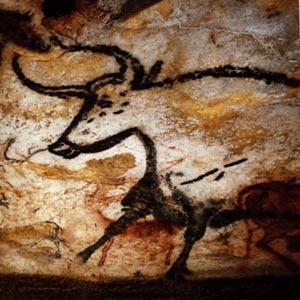
Obviously, the point of a scroll is to make the magic portable, convenient, and disposable. And, obviously, you can't do that with a cave wall or ceiling, but it was the first writing substrate. Every type of writing medium requires both a pigment and a medium and, in these cases, the pigments included red and yellow ochre, hematite, manganese oxide and charcoal, held in a medium of animal fat to bind the pigment.

Wet Clay
In common use from 3500-1750 B.C.

As nomads became farmers in the fertile lands between the Tigres and the Euphrates, village culture necessitated the need for records of properties, laws, ets. So the Sumerians when straight to the most available materials... reed styluses and wet clay. Pictographic writing gave way to symbolic writing in the form of cuneiforms (quick marks made with a triangular tipped version of the stylus.)

So... get out your copy of Deities and Demigods, go to the Sumerian Mythos section, and consider that in the earliest of the time period reflected here, clerics of these gods would (most likely) not see papyrus for at least 1,000 years (if they saw it at all.) And parchment? Forget about it. By the time the Sumerian language was fading away as a sacred, ceremonial, literary and/or scientific language in Mesopotamia, parchment was just being invented. Now, go the Babylonian section of the book. Those clerics... maybe.

As far as incorporating clay tablets into game play, it's obviously not conducive to carrying even one spell tablet with you into a dungeon, unless you happen to possess a Bag of Holding. However, in more primitive cultures, spell tablets are an option. I could see clerics or magic-users going into battle accompanied by horse-drawn carts filled with spell tablets prepared with summoning and protection spells (the tablets would disintegrate upon use, similarly to their papyrus and parchment counterparts.)

Papyrus
Invented c. 1,000 B.C.

This is an Egyptian invention that dates to around 1,000 B.C. However, it was adopted soon after by the Greeks (being supplanted later in Greece by parchment, a Roman invention), and was used widely through Europe and the Roman and Byzantine empires until it was replaced by the less expensive paper (invented in China, but introduced to the West by way of Arabia.)

Papyrus as a substrate is made from the pith (the inner portion) of the Cyperus papyrus plant. It essentially consists of two layers (or sides) with the fibers in each side aligned with the same side, and perpendicular to the other side. The fibers in the top (recto) side run horizontally, and the fibers in the bottom (verso) side run vertically. For longer scrolls, multiple pages of papyrus were glued together. In regards to writing utensils, the Egyptians used brushes made from rush stems, whereas Greek scribes used hard reeds, cut with a nib and split at the tip to aid ink flow.

As for game play, consider this... sure, papyrus is cheaper, but it also has a +5% chance of failure (per DMG.) Why? Firstly, in dry climates (like Egypt) papyrus is fairly stable, but in more humid climates it is highly susceptible to mold. No reason to not up that % chance of failure in more humid climates, especially the longer that papyrus has been sitting around in a less-than-airtight scroll tube. Second, those striations in the recto and verso sides do not exactly make for the smoothest of writing experiences, especially with "loopier" writing forms. It serves the Eqyptian Demotic ("priestly") script well, given its strong vertical and horizontal strokes. But Elvish is a little on the loopier side. Consider upping that % chance of failure based on the quality of the papyrus, as well as the form of the writing being used by the scribe.

Parchment
Invented c. 500-200 B.C.

According to the Roman Varro, Pliny's Natural History notes parchment was invented under the patronage of Eumenes of Pergamon, as a substitute for papyrus, which was temporarily not being exported from Alexandria, its only source. ("Parchment" is actually an English word derived from the name of the city where it was reportedly invented.) Though a Roman invention, it was quickly adopted by the Greeks, and was used popularly throughout Europe, even concurrently with the use of paper up through the invention of the printing press (mid 1400s A.D.) In fact, though most copies of the Gutenberg Bible were printed on paper, a few parchment copies exist. Papermaking was mechanized around this time, which made paper inexpensive enough to allow it to become pervasive.

As a substrate, parchment is made from calfskin, sheepskin or goatskin, often split. Think of parchment as a "half-ass" version of leather in that it's limed (the part of the leather-making process that removes the flesh, fat and hair from the skin) but it's not tanned (which helps protect leather from weather/humidity.) The skins are then soaked, stretched and scraped to finalize the process. However, additional treatments could make the parchment smoother or more writing-friendly (like rubbing pumice powder over the flesh side while it was still wet.) But let's go back to that not-being-tanned thing for a minute. Uh-oh... guess what that means...

Parchment, like papyrus, is extremely affected by its environment and changes in humidity, which can cause buckling. Books with parchment pages were bound with strong wooden boards and clamped tightly shut by metal (often brass) clasps or leather straps; this acted to keep the pages pressed flat despite humidity changes. Even after the use of paper made such fittings unnecessary, they continued to be used as decorative element on bound books of paper. But let's face it, buckling is not molding. I guess that explains the "± 0% chance of failure" in the DMG.

Vellum
Popularized c. 500-1500 A.D.

Simply put, the difference between vellum and parchment is the difference between veal and beef, respectively. Vellum is really just a finer version of parchment made from the skins of calves and/or kids, depending on whether you believe the English or the French; it is either the split skin of any of several species (English) or the split skin specifically of the calf (French.) Now, when it comes to anything animal-related (particularly food-related, or quasi-food related) I tend to defer to the French over the English (but don't let them know I said that.) If this helps settle the argument, the term "vellum" comes from the French word "veau," which means "calf" or "veal." Most of the finer sort of medieval manuscripts, whether illuminated or not, were written on vellum. The Gutenberg Bibles mentioned above are (more specifically) on vellum.

In game, the thing to remember about vellum is that, for scribes, vellum's finer, smoother surface is the cream of the crop when it comes to writing anything. (Okay, that explains that -5% chance of failure from the DMG.) BUT!!! There is that climate thing to consider again. When store in areas with less than 11% relative humidity, it tends to get brittle. And in areas with 40%+ relative humidity, it has a propensity for mold and fungus growth. (Yummy!)

Paper
Invented c. 105 A.D.

Though the actual invention of paper is "shrouded in mystery," its invention was reported to the Chinese Emperor by Ts'ai Lun, an official of the Imperial Court. Even though paper was most likely invented 200 years earlier, WAY before Ts'ai Lun was born, Ts'ai Lun is nonetheless deified in China as the "god of the papermakers." By 600 A.D., paper was all over the far east. After the defeat of the Chinese in the Battle of Talas in 751 (present day Kyrgyzstan), the invention spread to the Middle East. By the 9th century, Arabs were using paper regularly (reserving the use of parchment/vellum for more important documents/manuscripts.) The oldest European paper documents date to around 1100 A.D. (most likely introduced to the West via The Crusades.)

In its more primitive forms (though still made essentially the same way today, albeit mechanized) plant fibers are soaked and pulped, set in a frame on a screen, shaken to cross the fibers and grains, the excess water pressed out, then the frame set aside for the paper to dry. The dried sheet of paper is removed from the mold, allowing the mold to be reused.

While the 1e DMG makes no mention of paper at all, by 3e you start to see mention of "high-quality" papers for use in scrolls. The more important thing to remember about paper, though, is the immense varieties of type based on the fibers and binders/additives used during the papermaking process. Vulnerability to weather and other conditions are completely dependent upon this.

LARGER-SCALE GAME CONSIDERATIONS
Again, I refer back to the 1e DMG. This time I refer to the entire "Manufacture of Scrolls" section beginning on page 117. Note how much attention is given to the ink formulas and to the quill types being used, going as far as including the formula for the ink required to scribe a protection from petrification spell. And note how little attention is given to the writing surface. Even the BX Expert rule book (as limited as it is) goes further than the DMG on the subject matter when it suggests a "scroll might require a special parchment." Given the information in the post above, I don't see why you couldn't require the same thing of the writing surface that you might of a quill or ink. Scroll types could necessitate that parchments or vellums be made from specific animals, perhaps prepared particularly by alchemical or magical means (beyond the standard liming process.) I don't see why you couldn't require paper for certain scrolls be made from the pulp of specific plants or trees. Or papryus prepared from cyperus papyrus plants that grow in particular waters. What would happen if the PCs were to get ahold of a particular type of parchment or paper but, having been lied to by the merchant, procure the wrong type? It might accidentally turn that summon dryad scroll into a summon dragon one.

Saturday, October 22, 2011

Knock knock. Who's there? Cthulhu. Cthulhu who?

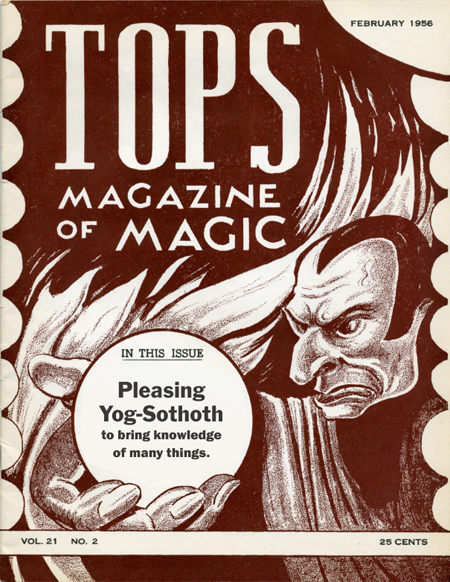
So at Half-price Books yesterday, I came across this vintage magic magazine from the 1950s and procured said magazine. The cover image struck me as rather "dark," considering this issue featured a host of rope tricks and a bunch of ads selling parlor style magic tricks. Originally, it said "In this Issue: Encyclopedia of Rope Tricks." I think my retouched description suits the image much better.

Thursday, October 20, 2011

Schools of Magic and Game Integration


Yoshitsuya Ichieisai, The Battle of Magic, c. 1860. Triptych, 29" by 14".


Last month, the Unfrozen Caveman Dice-chucker posted about his recent revelations on spell categories—specifically based on the 1978 ed. AD&D Player's Handbook. And as Timrod (a.k.a. the "Dice-chucker") noted in his blog post, "no explanation of the significance of these terms was given in the text of the PHB that I've found and, clearly, none is needed to play the game." Yep. That pretty much sums it up.

I came to a similar place as Timrod myself (in regard to 1st edition) myself way back when (c. 1985), as I set out to design my universal RPG system, The System. The idea of categories/schools of magic seemed ripe for the plucking. Since the goal of the magic system in The System was to create templates for spell creation (as there are no classes of magic user, or list of pre-created spells), the idea of categories/schools of magic was a perfect fit for the concept of spell development as a "formula" (A+B+C=Spell.) As part of that structure, each class of magic has a corresponding "value" that effects the overall complexity (in points) of spells that use those classes; classes like divination and property alteration have much lower values than the likes of transmutation and conjuring/summoning. If the GM deems that the effects of a spell deal with more than one school, both values are added into the overall complexity of the spell (which effects the "draw" on magical energies, as well as increasing the chances of failure during casting.)

The idea of schools as a D&D game mechanic wouldn't really come into it's own until the 2e Complete's Wizards Handbook. It was an offering for wizards to specialize, providing them with the typical "let's make it more complicated so you have to constantly look things up and buy more books" approach to the game. What's underneath all those restrictions, requirements and bonuses, however, is little more than more classes, disguised (or "divided" if you prefer) into schools.

In the original edition of The System, I called them "classes" of magic, but in developing the The System: Expanded (currently in development,) I've abandoned that name for two reasons; first, the term "classes" now refers to the types of spellcaster's within a game setting, developed as part of a Magic Profile Template for the world by the GM (FYI, it's a lot less restricting than than the old-school interpretation of the word implies); and second, the categories of magic are now "schools." Part of the reason I prefer the term "school" to "class," or even "category," is that the term implies that a spellcaster must be educated in using that type of spell.

In The System: Expanded, the schools of magic (prev. classes) will no longer have a static value (per the original edition); instead, the value of each school will be determined by the GM's Magic Profile for the world; this allows for types of magic that may be common within a particular setting to have a much lower value than the rarer types of magic within the setting. Additionally, characters who wish to specialize are not restricted by minimum pre-requisites or racial restrictions like the 2e application of schools. Instead, each school has a guiding set of the character's basic attributes that that are factored into a set of parameters that include, among others, the overall value of the school (i.e. "rarity" per the setting) and a character's aptitude (or inaptitude) based on race/genetics. What this produces is a complexity rating that comes into play regarding every aspect of learning and using those types of spells, from training/education time to chance of success/failure when casting to the spell to the strength/weakness of the spell when cast.

My original list of magic classes in The System was very much a direct interpretation of 1st edition AD&D (per the PHB,) but the new version for The System: Expanded uses a regrouped/compacted system with a couple of new category additions. It also continues to support the mixing/crossing of schools, but these mixed schools may be treated as new or unique schools (with an inherent unique value vs. a cumulative one.) The GM may also create altogether different schools in support of the campaign world. For example, a Far Eastern fantasy setting might use schools broken out by the elements (earth, air, fire, water, wood,) that incorporate many of the types of magic normally considered part of the standard schools (protection, alteration/transmutation, divination, et al.)

Want a sneak preview of the schools of magic from The System: Expanded? Check it out here.